

Hey {{first_name|Conscious Church Fam}} 👋
Morning! September is four days old and it honestly feels like the wildest week in a few year (AI related). OpenAI shipped GPT-6 Astra and its president said the words “AGI era” out loud, and over in video we quietly crossed the line where a model makes footage faster than you can watch it.
Here's what we're covering:
OpenAI ships GPT-6 Astra and calls it the AGI era
Video generation is now faster than real time
An AI that finds hidden heart disease in two seconds
Let's dive in 👇
✍️ Josh's Musings
I was pondering this week that the strange thing about AI isn’t really how futuristic it feels. It’s how quickly it disappears into ordinary life.
I’ve been playing with MiniMax H3, test generating videos for pennies. A bunch for the kids, initially starting with downright ridiculous. The sort of thing the internet will inevitably use (and has been) to manufacture industrial quantities of brain rot content.
But about five minutes later I’m thinking: hang on, I could make a little animated series for my kids. We could be learning about the Romans in homeschool in the morning and make our own episode about them after lunch. Before visiting Mexico, I could make them a film about the place we’re going. Bible stories could become little worlds they can actually explore.
(FYI was testing it out on FAL.ai *not affiliated, it’s super low cost in comparison to other tools out there).
Then I spent part of the week designing something completely different: a system that could quietly check flights between England and Mexico every day, remember every price it has ever seen, and eventually learn when our family should actually buy them.
Not “search Google Flights for me.”
More like: know how our family travels.
Know that Manchester might beat Leeds. Know that London is worth it if the saving is big enough. Know that sometimes getting to Spain first changes the maths. Remember what I paid last February and tell me, six months later, whether I jumped too early.
I was planning it out, but now Open AI Astra is here; I will likely run it through that to improve the plan.
Software is beginning to acquire context, memory and persistence. The things I build don't necessarily have to solve a problem once. They can sit there getting better at solving my particular version of the problem.
Yet weirdly, while all this technological acceleration is happening, I seem to be increasingly interested in the opposite direction.
The dream of buying land. Growing food. Fishing. Homeschooling. Building beautiful physical spaces. The Sanctuary vision. Somewhere with trees, water, cabins, gardens, animals, places to make things, places to pray, places where people can become quiet again.
Maybe the interesting question isn't how much technology we can cram into our lives.
Maybe it's how much life technology can give back to us.
If an agent can spend 365 days watching airfares so I don't have to, brilliant. I don't particularly want to become world-class at checking Google Flights.
I'd rather go fishing with my kids.
Food for thought.
Stay conscious, stay wild
Josh
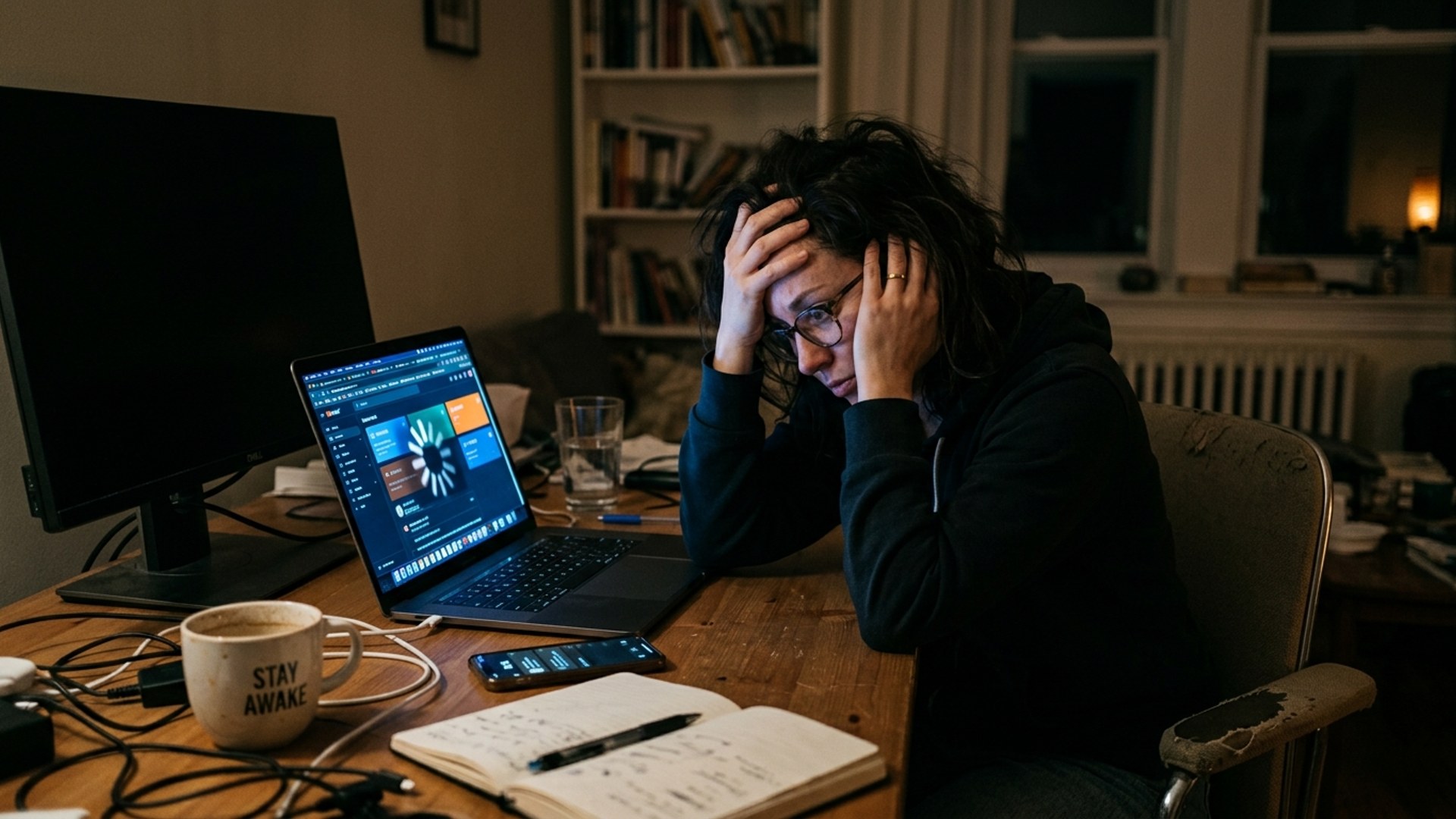
Image: Unite.AI | The Conscious Church
OpenAI released GPT-6 Astra on Wednesday, calling it the most intelligent and aligned model in the world. President Greg Brockman went further and said “Welcome to the AGI era”. The benchmarks are genuinely startling. The rollout, less so, and most paying users still couldn't touch it a day later.
The Details:
Astra hit 99.9% on ARC-AGI-3, up from GPT-5.6 Sol's 7.8%, with 98% on FrontierMath T4 and a perfect 100% on ExploitBench for cybersecurity
It still sits at 61 on Artificial Analysis' Intelligence Index, behind Claude Fable 5.1, Opus 5 and Meta's Muse Spark 1.3
API pricing is $10 per million input tokens and $50 per million output, roughly 2.5x GPT-5.6 Sol
Launch day access went to a small group of organisations only, and Altman apologised the next morning for a “messy” rollout, offering paying users a banked reset for every day they were locked out
Conscious Take:
Brockman saying “AGI era” (Artificial General Intelligence, a hypothetical type of computer software that can match or beat human intelligence across all mental tasks) is the real story here, not the benchmark table. The examples people are sharing on X and Youtube are pretty remarkable, the quality of not only the building or doing, but the reasoning/troubleshooting etc that it does alongside it.

Image: MetaTalks | The Conscious Church
Fal took MiniMax's H3 video model, rebuilt the inference around it, and got it running 35 times faster than the original endpoint. A five second clip now renders in under three seconds, which means the model makes footage quicker than you can sit and watch it. Somebody immediately pointed it at a livestream, and it has not stopped since.
The Details:
H3 Max renders a five second, 768p clip with native audio in under three seconds, so generation now outpaces playback
Fal's own inference tuning gave it a 35x speed-up over MiniMax's standard endpoint
The continuous version, H3 Max Director, holds up to two minutes of context, so each new block builds on the last instead of resetting
Twitch and YouTube both pulled the original infinite stream, so Fal launched fal.live, where viewers vote on prompts to steer what gets generated next
Conscious Take:
The endless AI slop streams are the least interesting thing you can do with this. Faster and cheaper than real time means a parent can make a proper animated Bible mini series or a homeschool history unit in an afternoon, and that used to need outsourcing.
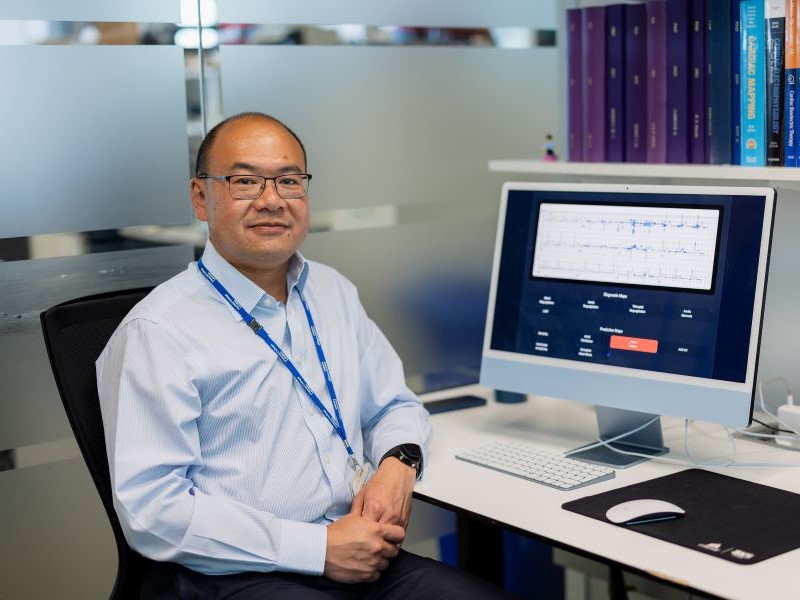
Image: British Heart Foundation | The Conscious Church
Imperial College London researchers built a model that reads a standard ECG and spots heart failure and valve disease that clinicians cannot see in the same trace. It takes under two seconds, and it runs on a test the NHS already does millions of times a year.
The Details:
Trained on 10.6 million ECGs, then tested against 72,475 traces linked to real scan results
Picked up 77 to 81% of heart failure cases and 80 to 90% of aortic stenosis cases
Patients often wait months for a heart ultrasound after referral, so the tool is aimed at pushing the highest risk people up the queue
Funded by the British Heart Foundation and presented in Munich, with a 590 patient NHS trial now running in London and Bristol, and routine use possible within about two years
Conscious Take:
No new scanner, no new appointment, just more signal pulled out of a test the NHS already runs millions of times. Cheap wins like this will help more people than most of what got announced this week.
📬 One quick ask...
If this email has been helpful, would you forward it to one person this week who might be interested? Thanks :)
"Whatever you do, work at it with all your heart, as working for the Lord, not for human masters." : Colossians 3:23
Build with the tools. But build for the right reasons.
That's all for now
Stay conscious,
Josh
P.S. If you liked this then please forward it on to someone you think would enjoy it. And if someone forwarded you this and you liked it, you can sign up here.
